

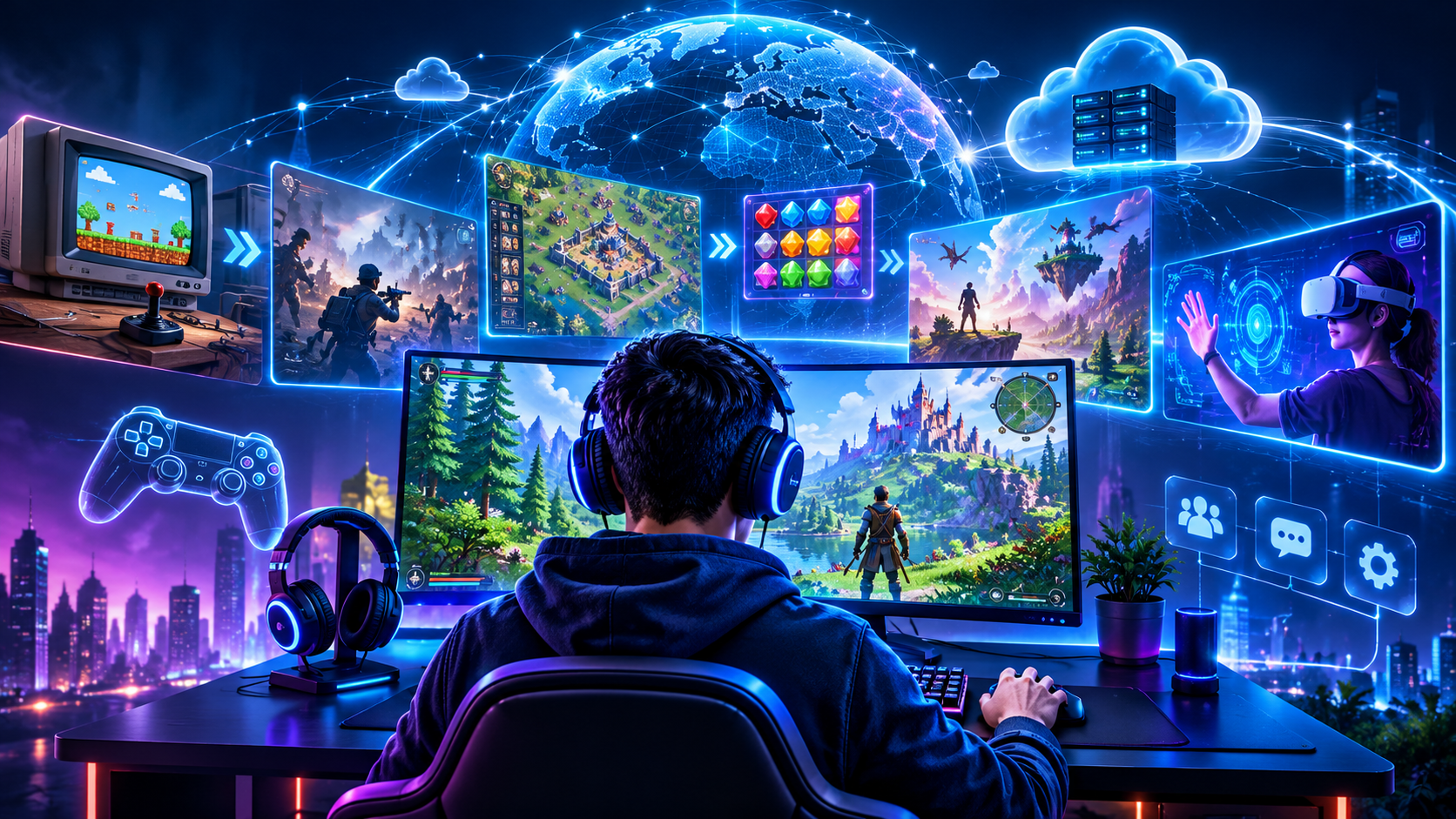
Online gaming has become one of the most influential forms of digital entertainment in the modern world. What once started as a simple way to play video games with friends has developed into a global industry connecting millions of players through the internet. Today, people can explore virtual environments, participate in competitive challenges, collaborate with other players, and enjoy a wide variety of interactive experiences from almost anywhere.
The growth of internet connectivity, mobile technology, and advanced gaming platforms has made online gaming more accessible than ever. Whether someone enjoys strategy-based challenges, multiplayer adventures, casual games, or digital entertainment platforms, there are countless opportunities to discover something interesting.
Understanding the development of online gaming, its popular features, and the technology behind it provides valuable insight into why this form of entertainment continues to attract audiences worldwide.
Understanding the World of Online Gaming
Online gaming refers to playing digital games through an internet connection. Unlike traditional offline games, online platforms allow participants to interact with other players, access shared environments, and experience activities that can change based on real-time participation.
These experiences are available across different devices, including desktop computers, laptops, smartphones, and tablets. This flexibility allows players to choose how and where they want to participate.
Different Types of Online Games
The online gaming industry offers numerous categories designed to accommodate different interests and playing styles.
Some popular categories include:
- Multiplayer Games: Allow multiple participants to interact, cooperate, or compete in shared environments.
- Strategy Games: Encourage players to develop plans, evaluate situations, and make thoughtful decisions.
- Adventure Games: Introduce exploration, storytelling, and interactive challenges.
- Casual Games: Provide simple mechanics and accessible entertainment for shorter sessions.
- Simulation Games: Recreate activities or environments through interactive digital experiences.
- Puzzle Games: Challenge players to solve problems using logic, observation, and creativity.
The variety of available categories makes online gaming appealing to people with different levels of experience and personal preferences.
Why Online Gaming Continues to Grow
The popularity of online gaming is influenced by several important factors. Improvements in technology have made digital entertainment easier to access, while developers continue introducing features that create more engaging experiences.
Accessibility Across Multiple Devices
One of the biggest advantages of modern online gaming is device compatibility. Players no longer need expensive gaming equipment to enjoy every type of digital entertainment.
Many platforms are designed to work through standard web browsers or mobile applications. This makes it easier for users to access their preferred activities without complicated installation procedures.
Mobile gaming has also contributed significantly to industry growth. Smartphones allow people to enjoy interactive entertainment while traveling, relaxing at home, or taking breaks throughout the day.
Social Interaction and Multiplayer Experiences
Online gaming is not limited to individual entertainment. Many platforms provide opportunities for communication, teamwork, and friendly competition.
Multiplayer environments allow participants to exchange ideas, develop strategies, and work toward shared objectives. These interactions can make gaming more engaging because every session may introduce different challenges and outcomes.
For many players, the social aspect is just as important as the games themselves.
Continuous Innovation
Game developers regularly introduce new mechanics, visual improvements, and interactive features. These updates help maintain interest and encourage players to explore different experiences.
Modern platforms increasingly use improved graphics, responsive interfaces, and advanced networking systems to create smoother digital environments.
Essential Features of a Modern Online Gaming Platform
A reliable online gaming platform should provide more than an extensive selection of entertainment options. Its overall quality depends on usability, performance, security, and the ability to support different devices.
User-Friendly Navigation
Clear navigation helps visitors find the information and features they need without unnecessary complications.
An organized interface generally includes understandable menus, accessible categories, readable descriptions, and responsive controls.
Good navigation is particularly important for new visitors because it allows them to become familiar with a platform before exploring its available features.
Performance and Stability
Technical performance directly influences the overall experience. Slow loading times, unexpected interruptions, and inconsistent connections can make digital activities frustrating.
A well-developed platform should prioritize optimized performance, reliable infrastructure, and compatibility with commonly used browsers.
Stable connectivity is also important for multiplayer environments where real-time communication and interaction are necessary.
Security and Responsible Access
Digital security should always be an important consideration when choosing an online platform.
Users should look for services that explain their privacy policies, provide secure account management, and communicate how personal information is handled.
It is also important to create strong passwords, avoid sharing sensitive account details, and access platforms through verified websites.
Responsible participation should remain a priority. Users should understand the rules of each platform, recognize potential risks, and establish appropriate limits on their online activities.
Exploring Online Gaming Platforms and Digital Communities
The increasing number of online entertainment platforms gives users more opportunities to discover different services. However, selecting a suitable platform requires careful consideration.
Rather than focusing only on promotional messages, visitors should evaluate the overall experience, available information, accessibility, and transparency.
For example, people researching different digital entertainment destinations may come across resources such as Togel279, which can be explored as part of their broader online platform research.
Another destination associated with the same name is Togel279. Comparing website information, navigation, accessibility, and published policies can help visitors better understand the services presented on different digital platforms.
When exploring any online destination, users should independently verify its legitimacy, security practices, and applicable terms before creating an account or providing personal information.
The Role of Technology in Modern Gaming
Technology is one of the primary forces shaping the future of online gaming. Improvements in computing power, internet infrastructure, and software development continue to create new possibilities for interactive entertainment.
Cloud-Based Gaming Technology
Cloud gaming allows certain games to run on remote servers rather than relying entirely on a user’s local hardware.
The technology can reduce the need for expensive equipment because processing takes place in data centers. Players access the experience through an internet connection and a compatible device.
However, performance still depends on internet speed, server availability, and network latency.
Artificial Intelligence in Game Development
Artificial intelligence is increasingly used to improve game environments and development processes.
AI-powered systems can help developers create more responsive non-player characters, adaptive challenges, and personalized experiences.
These technologies can also assist with testing, identifying technical problems, and improving the overall quality of digital products.
Virtual Reality and Augmented Reality
Virtual reality and augmented reality introduce new ways to interact with digital environments.
Virtual reality uses specialized equipment to create immersive experiences, while augmented reality combines digital elements with the physical surroundings.
Although these technologies are still developing, they offer interesting possibilities for interactive entertainment, education, and social experiences.
Benefits of Online Gaming
When approached responsibly, online gaming can provide several forms of entertainment and opportunities for personal development.
Supporting Problem-Solving Skills
Many games require players to analyze information, recognize patterns, and evaluate possible solutions.
Strategy and puzzle-based activities can encourage logical thinking and decision-making.
Encouraging Cooperation
Team-based games often require communication, coordination, and collaboration.
Participants learn to work toward shared objectives, exchange information, and adjust their approaches when circumstances change.
Providing Accessible Entertainment
Online platforms offer entertainment across different devices and schedules.
Players can select activities based on their available time, interests, and preferred level of complexity.
Nevertheless, maintaining a healthy balance between gaming, work, education, physical activity, and personal responsibilities remains essential.
Challenges Facing the Online Gaming Industry
Despite its continued growth, online gaming also faces several challenges that developers, platform operators, and users should understand.
Cybersecurity and Privacy Risks
Online environments may expose users to phishing attempts, fraudulent websites, account theft, and unauthorized data collection.
Users should avoid suspicious links, verify website addresses, and never disclose passwords or verification codes to unknown individuals.
Platforms should also maintain appropriate security measures and communicate their data-handling practices clearly.
Unhealthy Gaming Habits
Spending excessive time playing games can interfere with daily responsibilities and personal well-being.
Setting time limits, taking regular breaks, and maintaining offline activities can help create a healthier relationship with digital entertainment.
Fairness and Transparency
Fair participation is important for maintaining trust in online gaming communities.
Developers should provide clear rules, explain relevant game mechanics, and establish reasonable procedures for addressing complaints or technical problems.
Transparent policies help users understand what to expect when participating in digital environments.
The Future of Online Gaming
The future of online gaming will likely be shaped by further technological improvements and changing user expectations.
Faster internet connections, more powerful mobile devices, cloud infrastructure, and artificial intelligence may introduce increasingly sophisticated interactive experiences.
Cross-platform compatibility is another important development. It allows people using different devices to participate in shared gaming environments.
Developers are also expected to continue improving accessibility, interface design, and customization options to accommodate a wider audience.
At the same time, privacy protection, responsible gaming practices, and transparent platform operations will remain important considerations as the industry expands.
Conclusion
Online gaming has evolved from a relatively simple digital activity into a diverse entertainment industry supported by advanced technology and global connectivity. Its appeal comes from accessibility, social interaction, creative experiences, and the wide selection of available game categories.
As technology continues to develop, online platforms will have more opportunities to introduce innovative features and improve the way people interact with digital entertainment.
For users, the best approach is to explore platforms carefully, prioritize security, understand applicable policies, and maintain responsible habits. With these considerations in mind, online gaming can remain an enjoyable part of the broader digital entertainment landscape.
