

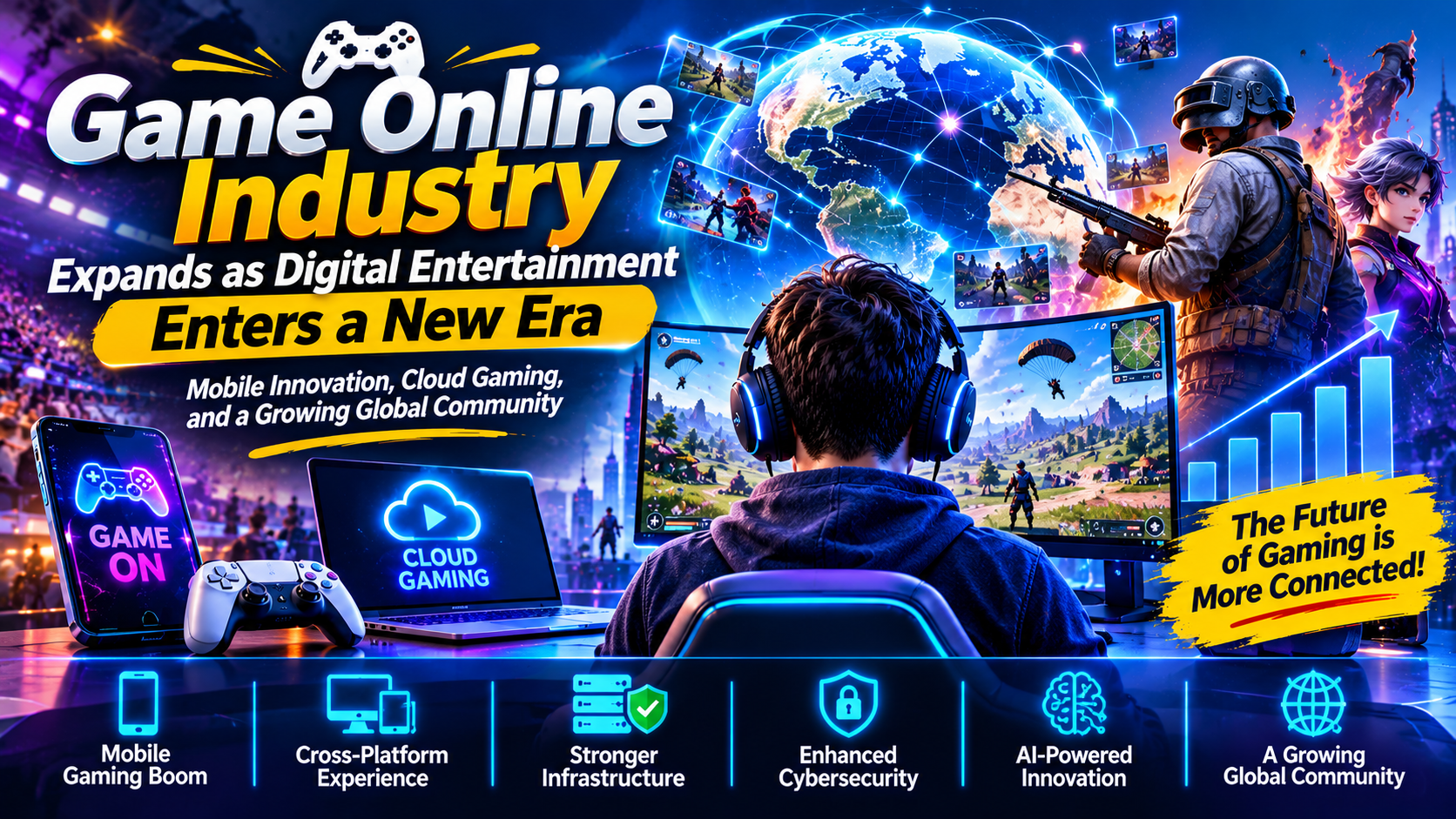
The global digital entertainment industry continues to evolve as Game Online platforms introduce new technologies, expand their audiences, and reshape how consumers interact with interactive media. Improvements in internet infrastructure, mobile hardware, and digital distribution have created new opportunities for developers and publishers seeking to reach players across international markets.
Industry developments reveal a significant transformation in gaming habits. Activities once associated primarily with dedicated consoles and personal computers are increasingly accessible through smartphones, tablets, and cloud-based services. These changes have encouraged companies to reconsider traditional business models while placing greater emphasis on accessibility, software performance, and long-term player engagement.

Mobile Technology Reshapes Gaming Accessibility
Smartphones Become Major Gaming Devices
Mobile gaming has established itself as a significant component of the broader entertainment market. Modern smartphones offer increasingly capable processors, advanced graphics systems, and improved connectivity, allowing developers to deliver sophisticated interactive experiences.
The popularity of portable devices has also influenced game design. Shorter sessions, simplified navigation, and responsive touchscreen controls have become important considerations for publishers targeting mobile audiences.
Meanwhile, application marketplaces provide developers with distribution channels capable of reaching users across multiple geographical regions. However, competition within these marketplaces presents challenges for smaller studios attempting to establish visibility.
Cross-Platform Development Gains Industry Attention
Cross-platform functionality represents another important development. Compatible systems allow participants using different hardware to interact within shared environments, although support varies between individual titles.
Developers face additional technical requirements when introducing these features. Differences in processing power, control methods, and operating systems can complicate synchronization and performance optimization.
Industry observers regard cross-platform compatibility as one factor influencing the competitive position of modern gaming services.
Changing Consumer Preferences Influence Platform Development
Entertainment Categories Become More Diverse
The expansion of online gaming has created a broad ecosystem encompassing competitive multiplayer titles, casual entertainment, strategy games, simulations, and casino-style digital products.
Players searching for online entertainment encounter numerous brands and promotional expressions. Terms such as slot777 appear in searches associated with particular gaming services and slot-themed content. However, the presence of a recognizable name does not independently establish a service’s regulatory status or operational reliability.
Another expression frequently encountered in Indonesian gaming discussions is slot gacor, commonly used in promotional material to suggest favorable slot outcomes. Such descriptions should not be interpreted as independently verified indicators of future results.
These expressions illustrate how localized language and digital marketing practices influence the visibility of gaming content.
Subscription and Free-to-Play Models Expand
Gaming companies increasingly offer multiple approaches to accessing entertainment. Subscription services provide access to selected libraries, while free-to-play games typically generate revenue through optional purchases or advertising.
Premium titles continue to operate alongside these models, giving consumers different purchasing options.
The effectiveness of each approach depends on audience preferences, production costs, platform restrictions, and the perceived value of available content.
Infrastructure Investment Supports Growing Demand
Server Reliability Remains a Critical Challenge
As connected games support larger audiences, infrastructure reliability has become a major operational concern.
Server capacity, network latency, software stability, and maintenance procedures directly influence the quality of multiplayer sessions.
Unexpected increases in user activity may create performance problems when systems lack appropriate scaling capabilities. Developers consequently rely on monitoring tools, distributed infrastructure, and load-testing procedures to identify weaknesses before they affect large numbers of users.
Cybersecurity Receives Greater Attention
Security concerns have accompanied the industry’s expansion. Gaming accounts may contain personal information, purchasing records, and stored digital content.
Publishers increasingly implement security measures such as multifactor authentication, encrypted communications, and account recovery safeguards.
Nevertheless, phishing attempts, credential theft, and malicious software remain persistent threats. Consumer awareness continues to play an important role in reducing exposure to these risks.
Industry Outlook Highlights Technological Competition
Cloud Gaming Creates New Distribution Opportunities
Cloud gaming services process gameplay remotely and stream the output to compatible devices. This approach may reduce hardware requirements for users, although it depends heavily on network quality and server availability.
Technology companies continue exploring methods to minimize streaming delays and improve image quality under changing network conditions.
The success of these services will depend partly on infrastructure investment, content availability, subscription pricing, and consumer expectations.
Developers Explore Artificial Intelligence
Artificial intelligence is influencing several areas of game production, including automated testing, procedural content generation, and player-support systems.
Developers can use analytical tools to investigate technical problems and examine how users interact with particular features.
At the same time, industry discussions increasingly address responsible data collection, intellectual property questions, and the transparency of automated systems.
These developments are expected to remain important subjects for publishers, technology providers, and regulators monitoring the continuing expansion of interactive entertainment.
