

Hair loss is a common concern that can affect people of different ages and backgrounds. Seeing more hair on a pillow, in the shower, or on a hairbrush can be worrying, but hair shedding does not always mean permanent hair loss.
Hair growth is influenced by genetics, hormones, nutrition, age, stress, medical conditions, medications, and scalp health. Because the underlying cause can differ significantly from one person to another, identifying the reason for hair loss is an important first step before choosing a treatment.
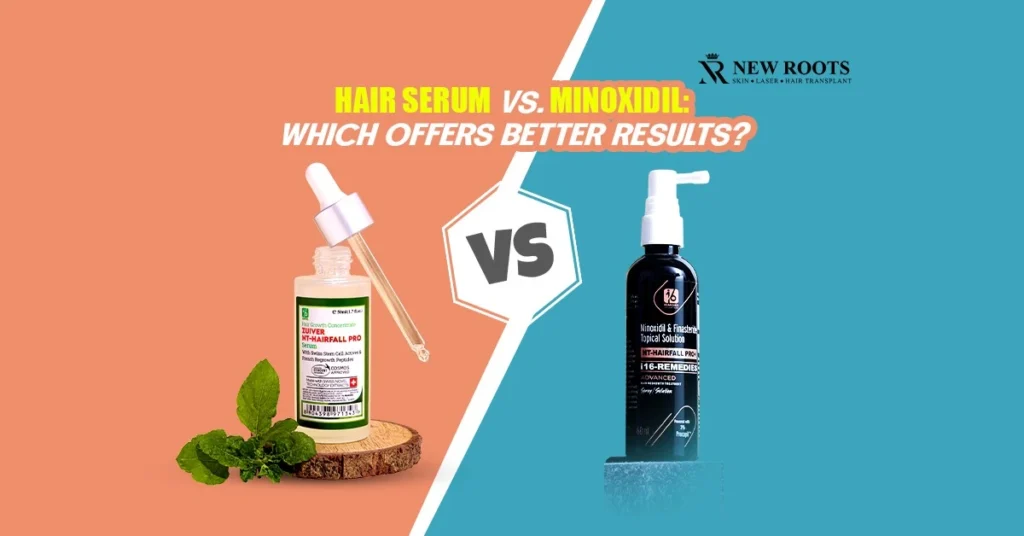
Among the options commonly discussed for hair concerns are minoxidil and topical hair growth serums. Although both may be used as part of a hair-care routine, they are not necessarily interchangeable. Understanding their differences can help people make more informed choices.
Understanding the Hair Growth Cycle
Hair does not grow continuously at the same rate. Each hair follicle moves through different stages of the growth cycle.
These are generally described as:
- Anagen: The active growth phase
- Catagen: A transitional phase
- Telogen: The resting phase
- Exogen: The shedding phase
At any given time, different hair follicles can be in different stages.
Temporary increases in shedding can occur after factors such as significant stress, illness, nutritional deficiencies, hormonal changes, or major lifestyle changes. In other situations, hair follicles may gradually become smaller or produce thinner hairs.
Understanding the pattern and duration of hair loss can help determine whether professional assessment is appropriate.
Common Causes of Hair Loss
Hair loss can have many causes.
Genetic hair loss
Androgenetic alopecia is one of the most common forms of hair loss in both men and women. It is associated with genetic and hormonal factors and can gradually result in thinning hair.
Telogen effluvium
This type of temporary shedding can occur after physical or emotional stress, illness, surgery, significant weight changes, or other physiological events.
Nutritional deficiencies
Insufficient levels of certain nutrients may contribute to hair problems in some people. Iron deficiency, for example, can be associated with hair shedding.
However, supplements should not be taken solely on the assumption that a deficiency exists. Appropriate assessment can help determine whether supplementation is necessary.
Hormonal changes
Changes associated with pregnancy, menopause, thyroid disorders, or other hormonal conditions may affect hair growth.
Scalp conditions
Inflammation, infections, and certain dermatological conditions can also contribute to hair loss.
Because causes vary, persistent or sudden hair loss should be evaluated rather than automatically treated with a cosmetic product.
What Is Minoxidil?
Minoxidil is a topical medication that has been used for certain types of hair loss.
It is available in different formulations and concentrations depending on the product and market. Minoxidil is commonly associated with androgenetic hair loss and works by influencing the hair-growth cycle.
The exact mechanism by which topical minoxidil promotes hair growth is not completely understood, but it is believed to affect the hair follicles and prolong the growth phase.
Treatment response varies between individuals.
How Does Minoxidil for Hair Work?
People searching for minoxidil for hair are often looking for ways to address thinning or increased shedding.
Minoxidil may help some people maintain or regrow hair in certain forms of hair loss. However, it is not a universal treatment for every cause of hair loss.
It is also important to understand that results generally require consistent use. Stopping treatment can result in the loss of benefits gained from continued use over time.
Before starting treatment, users should read the product information carefully and seek professional advice when appropriate.
What Can You Expect When Starting Minoxidil?
Hair treatments do not generally produce immediate visible results.
In some people, increased shedding can occur temporarily after beginning minoxidil. This can happen as hair follicles transition between growth phases.
Visible changes may take several months, and individual responses vary.
Consistency is important, but applying more product than recommended does not necessarily produce faster results and may increase the likelihood of side effects.
Possible Side Effects of Minoxidil
Topical minoxidil can cause local side effects in some users.
These may include:
- Scalp irritation
- Dryness
- Itching
- Redness
- Flaking
Some people may also notice unwanted hair growth in areas where the product accidentally comes into contact with the skin.
People who experience significant irritation or other concerning symptoms should stop using the product and seek medical advice.
What Is a Hair Growth Serum?
A hair growth serum is generally a topical cosmetic or hair-care product formulated with ingredients intended to support scalp or hair appearance.
Unlike minoxidil, which is an active medicinal ingredient used for specific types of hair loss, hair serums can contain a wide variety of cosmetic ingredients.
Depending on the formulation, these may include:
- Peptides
- Botanical extracts
- Vitamins
- Antioxidants
- Moisturising ingredients
- Plant-derived compounds
- Scalp-conditioning ingredients
The evidence supporting individual serum ingredients can vary considerably.
How Do Hair Growth Serums Differ From Minoxidil?
The most important difference is their intended role.
Minoxidil is a recognised topical treatment for certain forms of hair loss, while a hair serum is generally formulated as a cosmetic or supportive hair-care product.
A serum may help improve the condition or appearance of the scalp and hair depending on its ingredients, but this does not mean that every serum has been clinically proven to regrow hair.
Consumers should therefore examine the specific ingredients and claims rather than assuming that all products marketed as “hair growth serums” work in the same way.
Choosing a Hair Growth Serum
When considering a hair growth serum, it is useful to look at the complete ingredient list and intended use.
Consider the following factors:
Ingredients
Check which active and supporting ingredients are included and whether they are appropriate for your scalp.
Product instructions
Follow the recommended application amount and frequency. Applying excessive amounts does not necessarily improve results.
Scalp sensitivity
People with sensitive scalps may want to introduce new products gradually and monitor for irritation.
Realistic expectations
A cosmetic serum should not be expected to reverse every type of hair loss. Its effectiveness depends on its formulation and the underlying cause of the hair concern.
Can Minoxidil and Hair Serums Be Used Together?
Whether two topical products can be used together depends on their ingredients and intended application.
Using several active products simultaneously can sometimes increase scalp irritation. It is therefore important to check product instructions and, when necessary, seek advice from a dermatologist or healthcare professional.
People should not assume that combining multiple hair-growth products will automatically produce better results.
A simple routine that is appropriate for the individual’s scalp and hair-loss pattern may be more practical than using numerous products.
The Importance of Diagnosing Hair Loss
One of the most important steps in managing hair loss is identifying the underlying cause.
For example, treating genetic hair loss is different from addressing hair shedding caused by nutritional deficiency or an inflammatory scalp condition.
A healthcare professional may consider:
- Pattern of hair loss
- Duration of shedding
- Family history
- Recent illness or stress
- Diet and nutritional factors
- Medications
- Hormonal factors
- Scalp condition
In some cases, additional examination or laboratory testing may be recommended.
Hair Care Habits That Can Support Scalp Health
Treatment is only one part of maintaining healthy hair.
Practical habits include:
Avoid excessive heat
Frequent use of high-temperature styling tools can contribute to hair-shaft damage and breakage.
Be gentle when brushing
Aggressive brushing or pulling can increase mechanical damage, particularly when hair is wet.
Avoid consistently tight hairstyles
Repeated tension from tight ponytails, braids, or extensions can contribute to traction-related hair loss.
Maintain balanced nutrition
Adequate protein, vitamins, minerals, and overall calorie intake support normal physiological processes, including healthy hair growth.
Take care of the scalp
Keeping the scalp clean and addressing persistent itching, scaling, inflammation, or other symptoms can support overall scalp health.
When Should You See a Doctor About Hair Loss?
Some forms of hair loss warrant professional assessment.
Consider seeking medical advice if you experience:
- Sudden or rapid hair loss
- Bald patches
- Significant scalp itching or inflammation
- Hair loss accompanied by other unexplained symptoms
- Hair loss after starting a medication
- Persistent shedding lasting several months
- Hair loss affecting eyebrows or eyelashes
- Scarring or visible changes to the scalp
Early assessment can be useful because some causes of hair loss may require specific treatment.
Frequently Asked Questions
1. What is minoxidil for hair loss?
Minoxidil is a topical medication used for certain forms of hair loss. It can help some people maintain or regrow hair, but effectiveness varies and it is not appropriate for every cause of hair loss.
2. How long does minoxidil take to work?
Hair growth is a gradual process. Visible improvement can take several months, and consistent use is generally required to maintain treatment benefits.
3. Can minoxidil cause initial shedding?
Some people experience increased shedding when starting treatment. This can occur as follicles transition through different stages of the hair-growth cycle.
4. What is a hair growth serum?
A hair growth serum is a topical product designed to support scalp or hair condition. Its ingredients and evidence can vary considerably between products.
5. Is a hair serum the same as minoxidil?
No. Minoxidil is a medicinal active ingredient used for certain types of hair loss, while hair serums are formulations that may contain cosmetic or supportive ingredients.
6. Can I use minoxidil and a hair serum together?
It depends on the specific products and ingredients. Combining multiple topical products may increase irritation in some people, so product instructions or professional advice should be followed.
7. Can nutritional deficiencies cause hair loss?
Certain nutritional deficiencies can contribute to hair shedding in some individuals. However, supplementation should ideally be based on appropriate assessment rather than assumption.
8. Does hair loss always mean permanent baldness?
No. Hair shedding can be temporary and may occur after illness, stress, hormonal changes, nutritional problems, or other triggers. The outcome depends on the underlying cause.
9. When should I see a dermatologist for hair loss?
Professional assessment is particularly useful for sudden, rapid, patchy, persistent, or unexplained hair loss, as well as hair loss accompanied by scalp inflammation or other symptoms.
Conclusion
Hair loss can result from many different factors, so choosing an appropriate treatment begins with understanding the underlying cause. Minoxidil has an established role in managing certain forms of hair loss, while hair growth serums can provide additional topical care depending on their formulation and ingredients.
Neither approach should be viewed as a guaranteed solution for every type of hair loss. Consistent use, realistic expectations, appropriate scalp care, and professional assessment when needed can help people choose a more informed approach to managing thinning or shedding hair.
